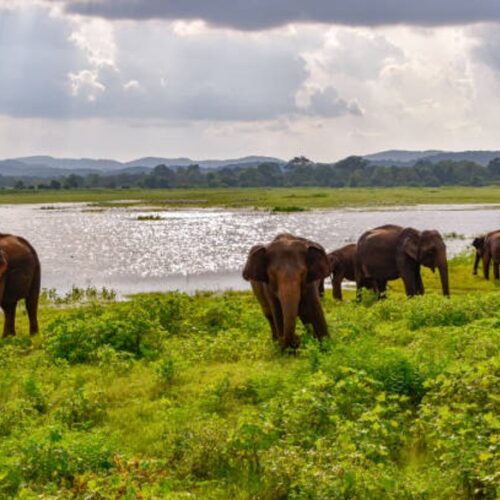
The park’s open terrain vast golden grasslands dotted with dead trees and water holes makes wildlife spotting remarkably easy compared to Sri Lanka’s more forested parks. Herds of 50–100 elephants are commonly seen, particularly around the Walawe Reservoir in the dry season (July to October), when animals congregate at remaining water sources. The park is home to approximately 500–600 elephants, one of the highest densities in Sri Lanka. Beyond elephants, Udawalawa supports a rich variety of wildlife including water buffalo, spotted deer, wild boar, toque macaques, and langur monkeys. Predators include leopards (rarely seen), fishing cats, and jackals. The reservoir attracts crocodiles, and the park is a paradise for birdwatchers with over 180 recorded species including the changeable hawk-eagle, serpent eagle, and the Sri Lanka grey hornbill.
The Elephant Transit Home, located at the western edge of the park, is a remarkable conservation project that rehabilitates orphaned elephant calves for eventual release back into the wild. Visitors can watch the young elephants being bottle-fed at scheduled feeding times a heartwarming sight that supports an important conservation initiative. Unlike elephant riding venues, the Transit Home prioritises the animals’ welfare and eventual independence. Safaris are conducted in open-topped jeeps, with experienced trackers who know the best spots for wildlife encounters. Morning safaris (6:00–10:00 AM) and afternoon safaris (3:00–6:00 PM) offer the best viewing opportunities when animals are most active. Udawalawa’s accessibility from the hill country, combined with its reliable elephant sightings and beautiful scenery, makes it an essential stop for wildlife enthusiasts and a perfect complement to the cultural experiences of the earlier part of any Sri Lanka itinerary.
Udawalawa National Park, located in Sri Lanka's southern dry zone, is renowned as one of the best places in Asia to observe wild elephants in their natural habitat. The park, covering 30,821 hectares of grassland, thorn scrub, and riverine forest, was established in 1972 to protect the catchment area of the Walawe River and has become a premier wildlife destination.
This comprehensive 14-day private tour takes you through the very best of Sri Lanka, from ancient sacred cities and UNESCO World Heritage Sites to misty...